Plan around the daily rhythm
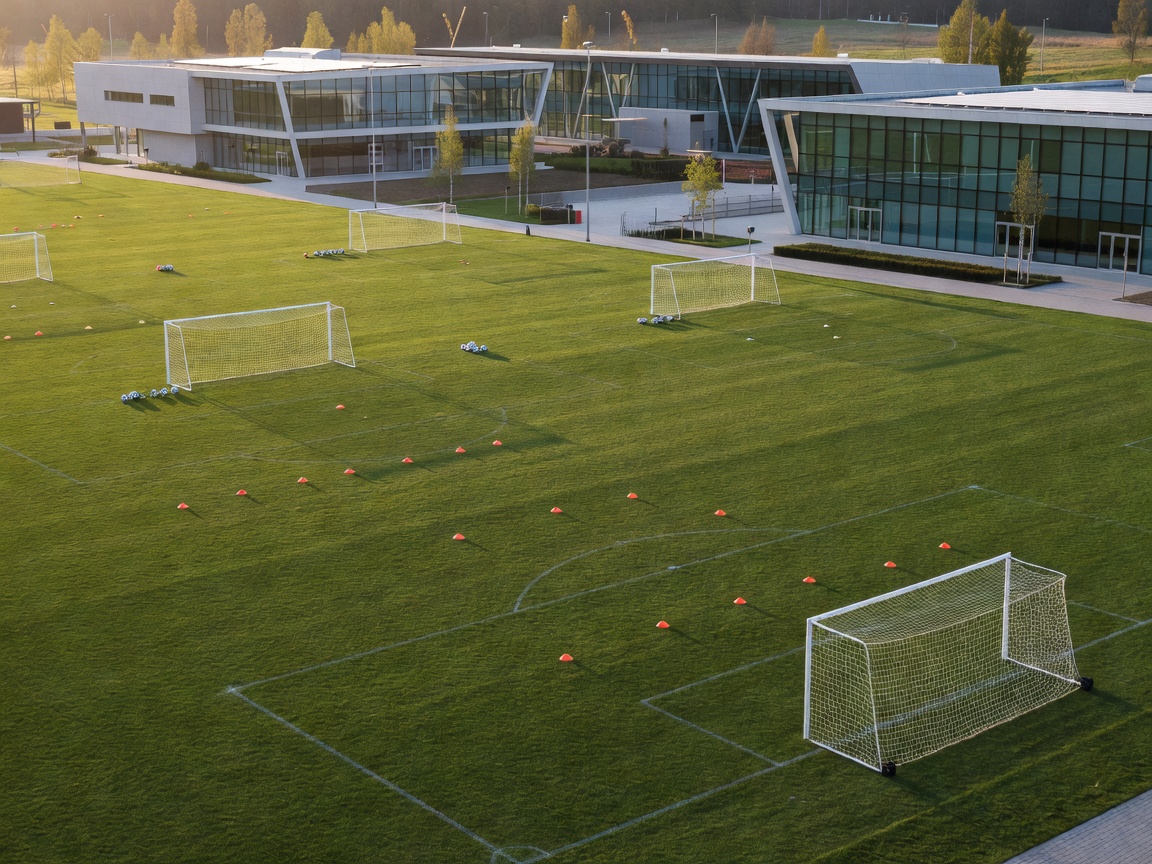
Campus planning begins with a useful question: what happens across an ordinary training day? Teams arrive, change, prepare equipment, use pitches, review work and move between medical, performance and coaching spaces. A plan that considers only the playing surface can create long walks, congested entrances or awkward handovers. Clear routes between arrival points, changing rooms, pitches and indoor areas make the site easier to operate.
The right footprint depends on the organisation. A compact training site may share rooms and rely on careful scheduling. A multi-pitch professional campus can separate activities and provide more choice, but adds land, staffing, servicing and upkeep demands. A site shared by several teams needs a timetable that accounts for age groups, staff access, equipment resets and maintenance windows. More space is not automatically more useful if it is difficult to manage.
Pitches and training zones
Outdoor pitches are the central resource, but they need not all serve identical purposes. A site may designate areas for full-team work, smaller technical practices, goalkeeper sessions or return-to-training activity. These are planning examples rather than a prescribed layout. Coaches and grounds staff should consider surface condition, dimensions appropriate to intended use, safe margins, drainage and the recovery time required between sessions.
Pitch availability is a scheduling question as much as a construction question. Weather, surface wear, maintenance and overlapping squads all affect access. Mapping common training patterns can reveal whether teams need separate zones at the same time, or whether a smaller number of well-managed spaces can work. Maintenance access should not rely on moving equipment through busy player routes whenever another arrangement is possible.

Buildings, circulation and support
Changing facilities, equipment storage and staff work areas are operational infrastructure. Storage near the activities it serves can reduce repeated handling; secure, well-organised stores also help staff check and maintain equipment. Routes should make sense for players, coaches, medical teams, grounds staff and visitors who have permission to be on site. Consider accessible entrances, step-free circulation where practicable, clear wayfinding and safe separation from vehicle or servicing movements.
Video and analysis spaces can support review when they are planned into the working day, with suitable connectivity and privacy. Medical and recovery access should be considered in relation to training areas, while respecting the different needs of clinical work and routine team operations. These are general planning principles, not claims about the layouts of particular clubs.
Indoor alternatives, light and weather
Indoor halls and covered areas can offer an alternative when weather disrupts outdoor work, though they do not reproduce every outdoor condition. Their use depends on the activities, available floor or turf surface, ceiling height, lighting and ventilation. Exterior lighting can extend practical use in darker months, subject to local rules, neighbouring uses and a professional lighting assessment. Climate, wind, rainfall and seasonal daylight should inform the balance of outdoor and indoor space.
Staff workflows matter too. Consider who prepares the space, stores equipment, checks the surface and resets the room between sessions. A building can look impressive but become a bottleneck if the changeover plan is unclear. Facility plans benefit from input from coaches, grounds staff, operations teams and accessibility advisers before decisions are fixed.
Different models, different trade-offs
A compact site favours short movement distances and flexible shared rooms, but scheduling pressure can be high. A multi-pitch campus offers more separation and activity choice, while requiring more land, surface care and coordinated operations. Shared facilities may use space efficiently across squads or organisations, yet demand transparent booking rules and agreed standards for storage, cleaning and pitch recovery. None is universally best: climate, budget, land, team numbers and competition level shape the practical answer.
European football has recognisable training environments associated with clubs such as Manchester City, FC Barcelona, Bayern Munich, Paris Saint-Germain and AFC Ajax. These are contextual examples of clubs with established training operations, not facility audits. We do not infer private layouts, access arrangements or technical specifications from their names. Private grounds should not be assumed open to visitors; verify access directly with the relevant operator.
Practical planning questions
- Which activities happen simultaneously, and which can share a space?
- How will pitch use, rest and maintenance windows be scheduled?
- Can people and equipment move without unnecessary crossing?
- Are storage, lighting, indoor alternatives and accessible routes considered?
- Who is responsible for daily checks, upkeep and room changeovers?
Good for / What to know
Good for: clubs, schools and planners reviewing a new site, improving an existing campus or coordinating shared training space. What to know: needs vary widely, private facilities may restrict access, and detailed design should be reviewed by relevant architects, engineers, grounds professionals and local authorities.